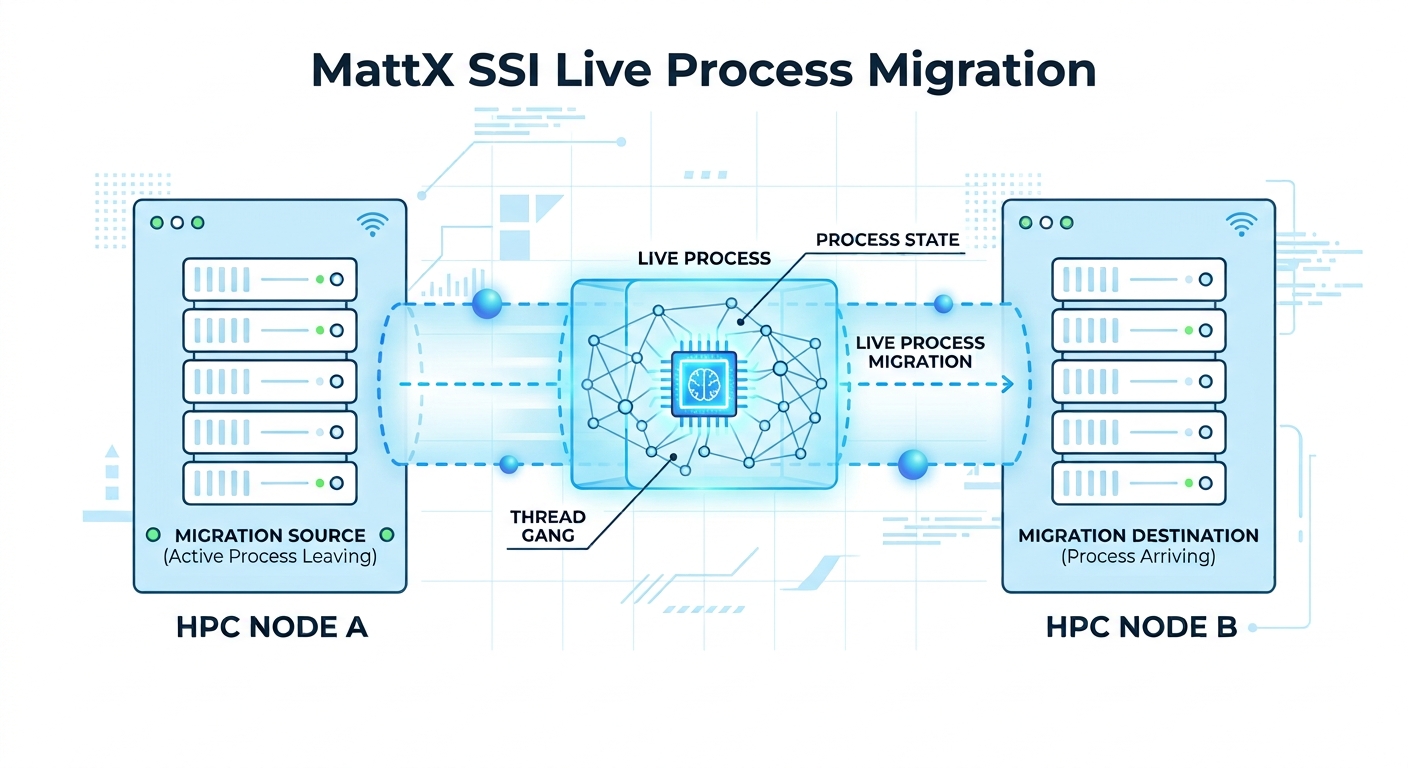
Almost 2 decades ago openMosix was the hottest open source Single System Image (SSI) cluster out there.
OpenMosix could migrate long running processes across a cluster and thus effectively allowing HPC workloads to be spread
across a cluster or migrated to a node with more resources, with no changes to the code.
The project however never got a 2.6 kernel port and thus was EOL by early 2008.
Earlier this year Matt Rechenburg, one of the original openMosix community members released MattX, the Modern SSI Cluster , which brought
back the openMosix vibes. MattX lacked a test suite and thus I had a suite build. Initially the Mattx Test suite just spun up a
number of VM's and migrated basic processes around to validate the new releases. Working on that Test suite I wondered if it weren't a good idea to take let some real HPC workloads migrate around, and
where better to find them than in the EESSI demo project.
A fresh-install, end-to-end walkthrough on an Orange Pi RV2: reproduce a silent NaN
failure in the stock EESSI HPL, trace it to one RISC-V vector kernel, and fix it —
correct results — with a single eb --from-pr.
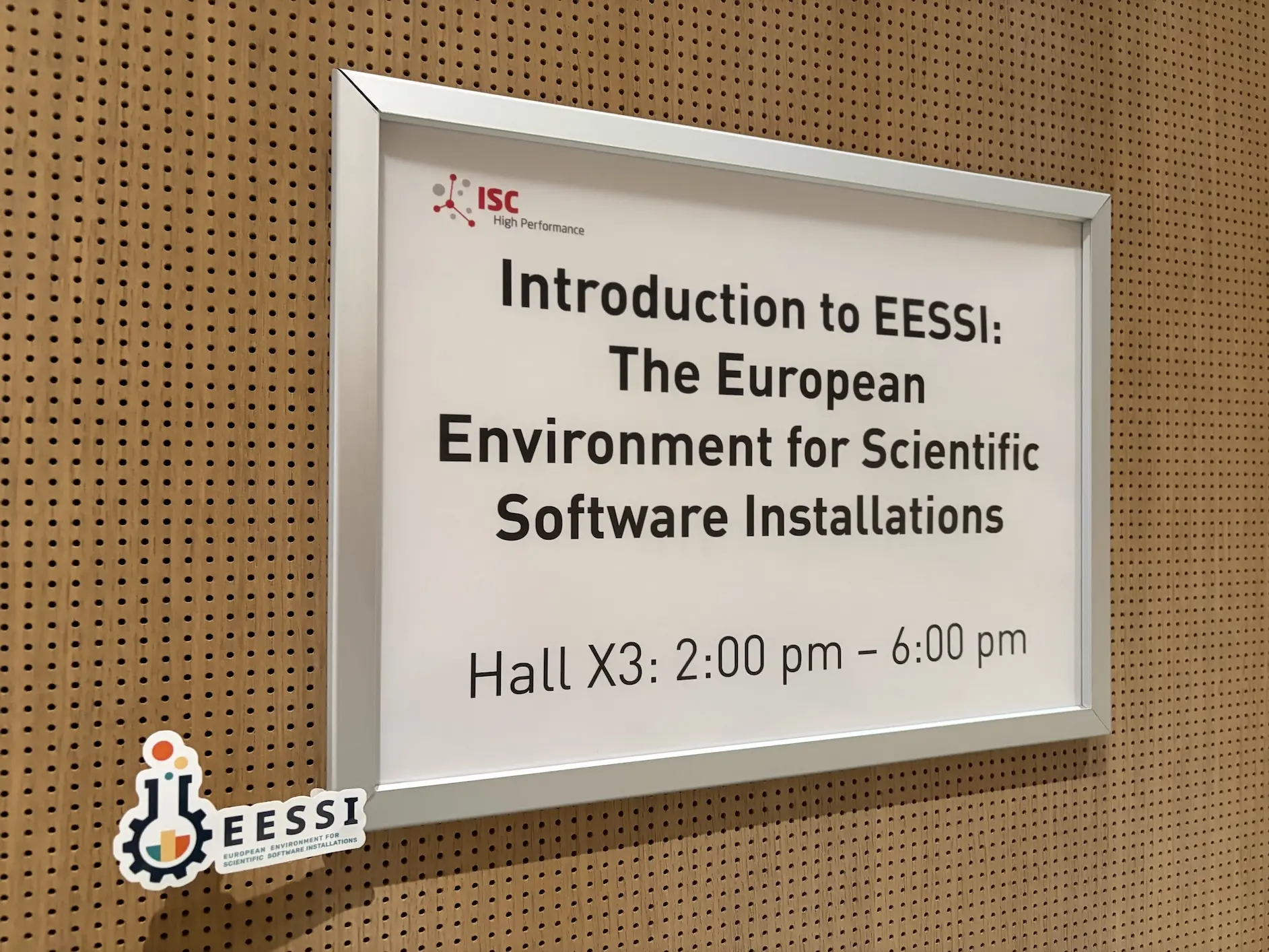
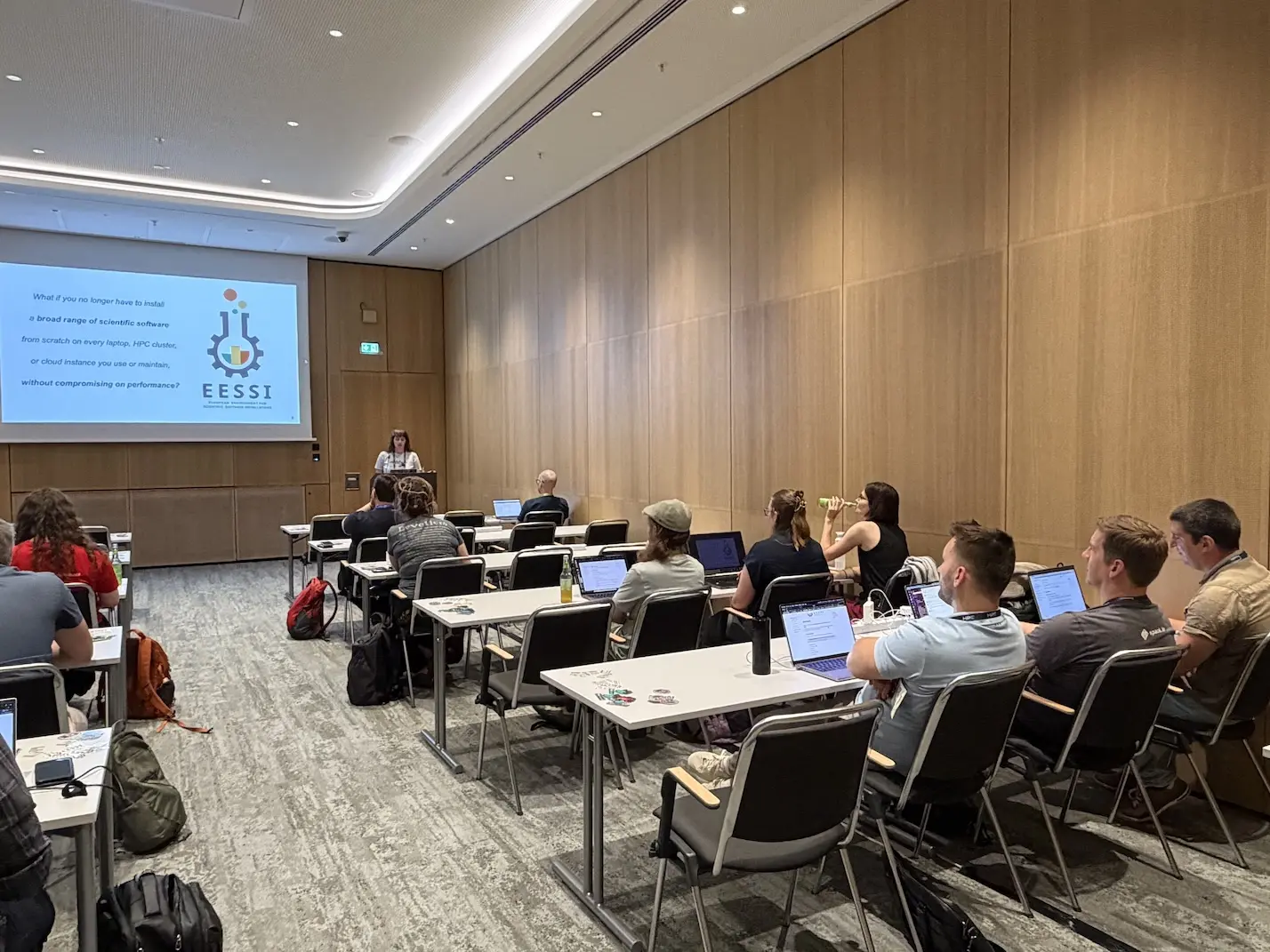
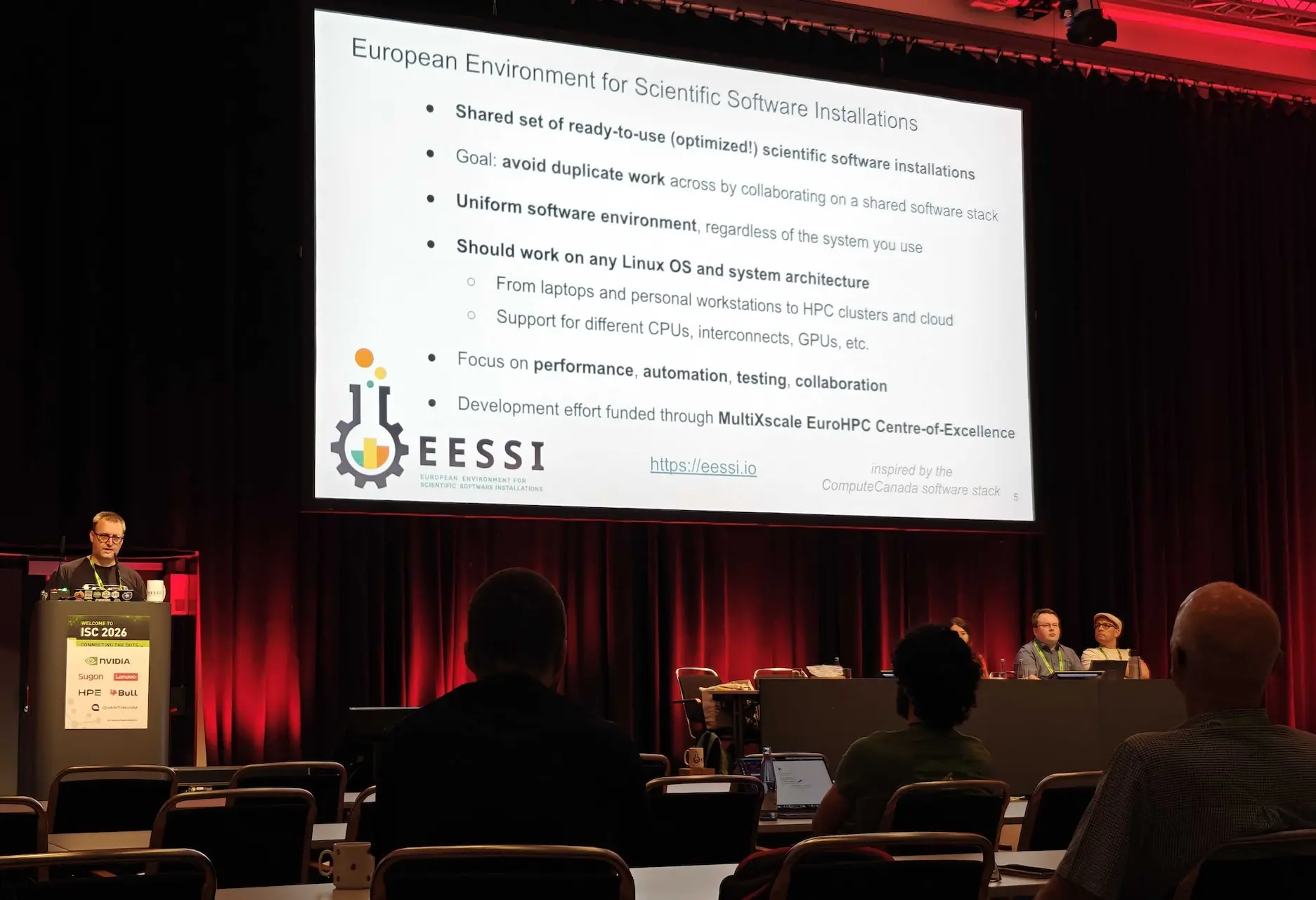
Next to the Introduction to EESSI half-day tutorial and a Birds-of-a-Feather (BoF) session we organized ourselves,
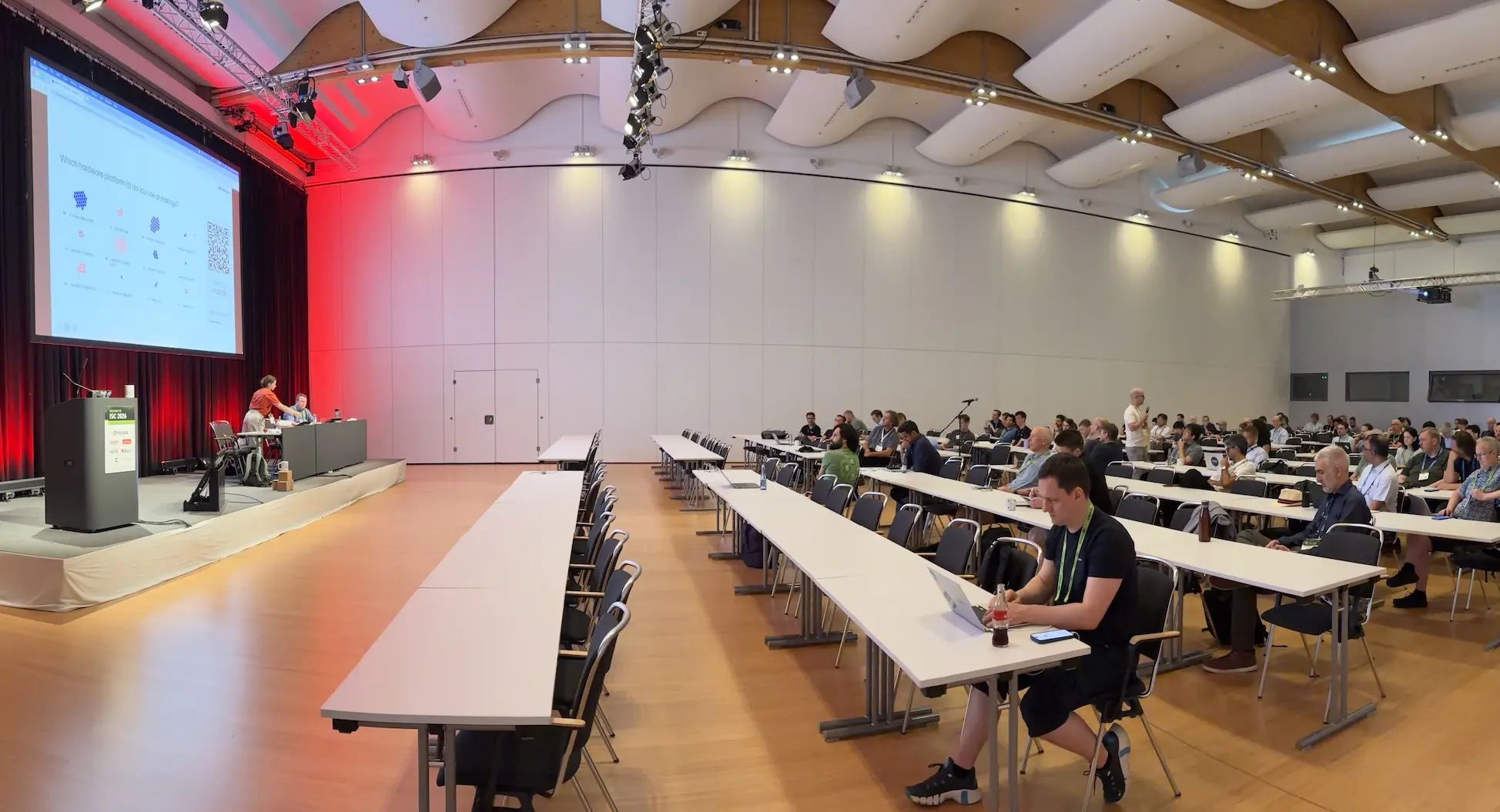
EESSI was also featured prominently in two other BoF sessions, including the one on the EuroHPC Federation Platform.
In addition, we gave presentations in two workshops, witnessed how EESSI got mentioned by speakers
in other sessions, and had lots of interesting discussions with members of the HPC community at the ISC exhibit
or when bumping into people in the hallway track.
The EESSI RISC-V software stack available through the dev.eessi.io/riscv repository
now includes the lfoss/2025b toolchain.
This is an important milestone for the RISC-V enablement work in EESSI, since it brings a
modern LLVM-based software toolchain to the growing collection of software available for
RISC-V systems through EESSI.
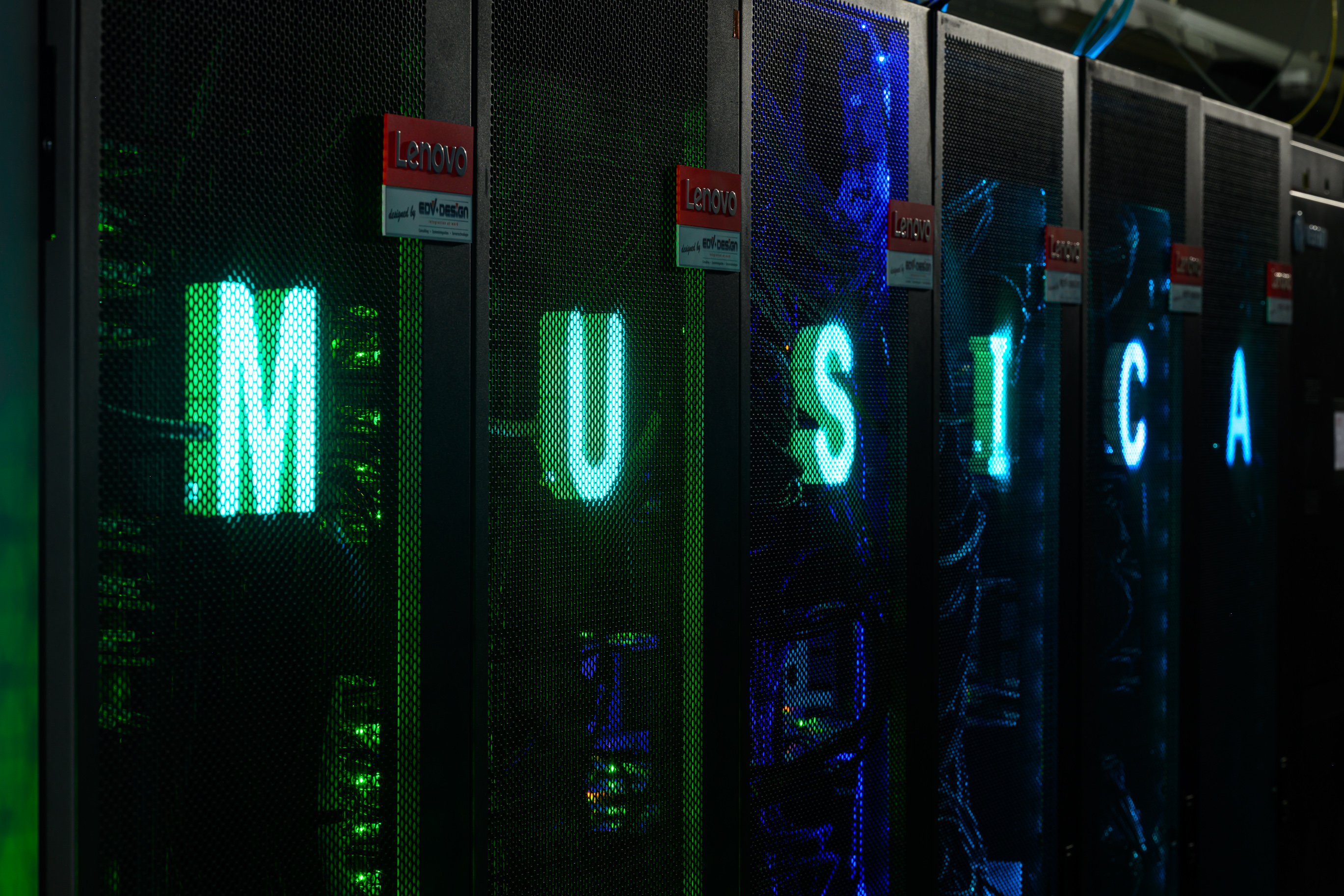
MUSICA (Multi-Site Computer Austria) is the latest addition to Austria's
national supercomputing infrastructure. The system's compute resources
are distributed across three locations in Austria: Vienna, Innsbruck,
and Linz. We describe the process that led to the adoption of EESSI
as a base for the software stack on the MUSICA system at the Austrian
Scientific Computing (ASC) research center.
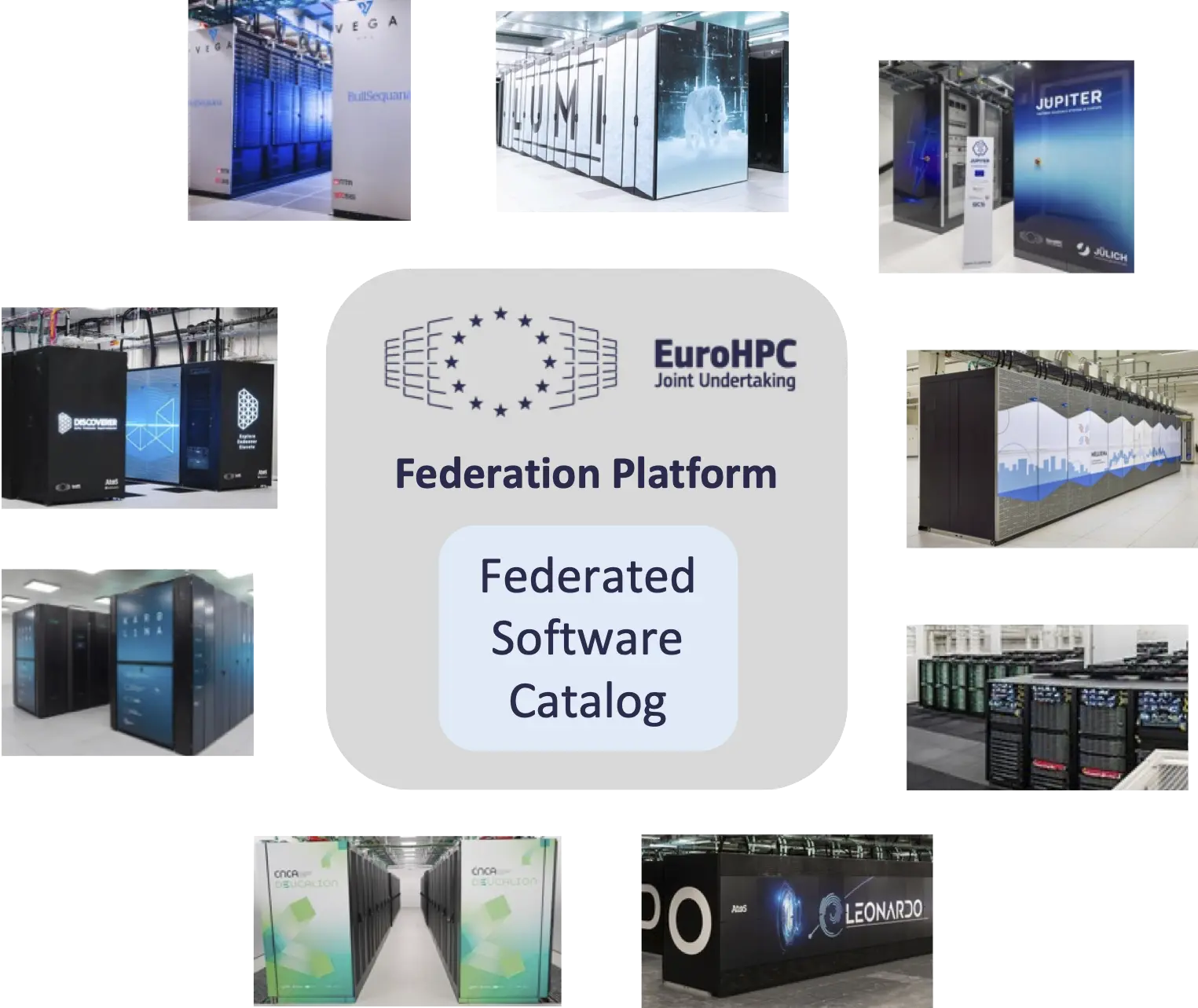
The Federated Software Catalog (FSC) component of EFP will use EESSI as a base. As a result, EESSI will soon be available on allEuroHPC supercomputers.
In fact, EESSI is already available on the majority of them today!
The HPC software landscape offers powerful tools for managing scientific software, such as EasyBuild and Spack.
EESSI provides a ready-to-use software stack with thousands of optimized software installations that were built with EasyBuild.
Imagine you are working on an HPC system with EESSI already available. You have access to a wealth of optimized installations for scientific software packages, libraries, tools, as well as compilers. But you need to install a new tool or a specific version of a package that's not in EESSI yet.
You can already extend EESSI with new software through the EESSI-extend module.
This utility provides you with a pre-configured EasyBuild installation that you can use to build packages from easyconfig files.
Like EasyBuild, Spack is a flexible build tool that also offers a vast repository of build recipes maintained by a large and active community, making it a familiar tool for many HPC users.
By enabling Spack to leverage software installations already available in EESSI as dependencies, we can offer users the best of both worlds: the convenience of a pre-built, optimized software stack combined with the flexibility to quickly build new packages using tools they already know.